Choosing where to buy insurance feels simple until you hit a snag. You start with a quick online rate, then a pop up asks for your VIN or roof age, and suddenly the number jumps by hundreds. Or a renewal arrives 18 percent higher and your inbox fills with pitches from an Insurance agency near me. The path you choose, through an insurance agency or directly from an insurer, shapes not just your price, but your coverage, claims experience, and how much time you spend fixing problems after something goes wrong.
I have sat at kitchen tables explaining water backup coverage while looking at a basement that flooded an hour earlier. I have watched an adjuster miss hail strikes on a roof, then watched a seasoned agent walk that same roof with a chalk stick and a camera to get it paid. I have also seen disciplined drivers save real money using telematics through a direct carrier’s app. The channel matters. Here is how to decide which one fits you.
What each channel actually is
An insurance agency is a licensed intermediary that sells and services policies on your behalf. Some agencies are independent, meaning they can place your coverage with multiple companies. Others are captive, meaning they sell for a single insurer. A State Farm agent, for example, represents one company. When you start a State Farm quote online, you can enter details digitally, but a local agent usually finalizes the policy and becomes your service point.
A direct insurer sells straight to consumers without third party agencies. Think of companies that quote, bind, and service through their websites, apps, and call centers. You interact with the insurer’s staff at each stage, from shopping to claims.
Both routes are regulated. Rates Home insurance are filed, underwriting is rules based, and claims are governed by the policy contract and state law. The differences emerge in how those pieces are matched to your situation, and in the service you receive when something is unclear or disputed.
Price mechanics you do not see on the quote screen
People assume agencies add cost. In personal lines like Car insurance and Home insurance, the base rates you see are the insurer’s, not the agency’s. In most states, commissions paid to the agency are built into the insurer’s expense structure. You do not pay a separate markup for using an agency, and the filed premiums are generally the same whether you buy through a direct channel or through a contracted agent. Exceptions exist in states that allow broker fees or in surplus lines markets, but for standard auto and home policies the price difference hinges on underwriting, discounts, and fit, not an agency surcharge.
Why one channel quotes lower on the same day:
- Underwriting appetite, the insurer’s taste for a risk, changes by ZIP code, roof age, driver profile, prior claims, and even local litigation trends. One company can be hot on suburban homeowners with composite roofs built after 2015, and cold on older shake roofs. An independent Insurance agency can pivot to a carrier that likes your exact profile. A direct insurer might not have a second option. Discount architecture differs. Direct carriers lean on digital purchase, pay in full, and telematics discounts. Captive carriers often bundle aggressively, pairing State Farm insurance home and auto with loyalty savings and claim free rewards. Independent agencies can assemble similar bundles across companies, sometimes adding niche credits, like water sensor installation or monitored alarm verification that certain carriers prize. Rating inputs are sensitive. The difference between a 12 year old roof and a 14 year old one can swing a home premium by 8 to 15 percent in hail prone states. A ticket aging from 35 to 36 months can drop an auto rate tier and cut 5 to 10 percent. Agencies tend to scrub these details, because they know which toggles move a rate, and they chase documentation you might not realize helps.
If you are comparing a State Farm quote with a direct online quote, match deductibles, liability limits, rental and roadside coverage, roof settlement type, and water backup endorsements. People routinely compare a $1,000 collision deductible with a $500 one without noticing. That single difference can erase any perceived price edge.
Service style and who shows up when it matters
Direct insurers are built for speed and uniformity. You can quote at midnight, get ID cards instantly, and file a glass claim in five minutes. If your insurance life is simple, this can be ideal. I have seen busy parents who rarely call an office crush their premiums by using a telematics program and automated billing. Their only issue all year was a cracked windshield, and the claim took ten minutes.
Agencies translate and advocate. They help you stage the facts in a way that fits the policy, not in a deceptive sense, but in a complete one. On home claims, agencies are often the difference between replacement cost and functional replacement cost when a roof is patched instead of replaced. On auto claims, I have watched agents get rental bills extended by speaking directly with adjuster supervisors when parts delays stretch repairs beyond the default allowance. During catastrophes, like a wildfire or a hailstorm, an agency that knows the local claims teams can route your file to a field adjuster faster than a generic call center path.
There is also a quieter form of service: preventing avoidable denials. A ten minute call about a backyard trampoline can save a claim headache later. Some insurers exclude them unless you add a rider or net enclosure confirmation. A good agent will ask, then document it. Direct applications may ask, but if you miss the nuance, it can bite you.
Product depth, from plain vanilla to odd flavors
For standard Car insurance and Home insurance, most carriers cover the same big buckets. Where they diverge is in endorsements, sublimits, and specialty programs. If you collect guitars, own a short term rental, drive for a rideshare app, keep a pit bike in the garage, or have a sump pump in a flood prone basement, one policy can be twice as useful as another at claim time.
Direct insurers generally keep a tight lineup. That yields clean digital flows and low confusion. Agencies, especially independents, can pull from carriers with niche endorsements. Consider:
- Water backup limits. Some carriers start at 5,000 dollars, others allow 25,000 or 50,000 with reasonable pricing. In older neighborhoods with clay sewer laterals, upgrading that endorsement matters. Roof settlement. Actual cash value vs replacement cost can be the difference between a check that covers half the shingles and a check that covers the whole job. Some carriers offer a matching endorsement so damaged shingles that cannot be matched trigger larger repairs. Vehicle use. If you DoorDash once a week, a carrier’s business use wording can decide if a claim pays cleanly. Some insurers add a rideshare or delivery endorsement for a small charge.
An agency sees enough of these edge cases to steer you before they are urgent.
Digital convenience, local accountability
A direct carrier’s mobile app can be excellent. You can add a vehicle, swap a driver, and pull ID cards in moments. Many agencies now offer similar portals, but they are a layer above the carrier system. When you see Insurance agency near me in your search results, you are weighing whether you appreciate having a person you can text who knows your file, or whether you prefer to manage everything yourself.
State Farm blends both worlds. You can start a State Farm quote online, manage your State Farm insurance account digitally, and still text your State Farm agent when a tow truck goes to the wrong address. That hybrid is part of why captive carriers persist. Independent agencies are catching up with modern tools, but their superpower is market access and judgment.
Where a direct insurer tends to win
If you have clean driving records, newish cars with standard features, a roof under 10 to 12 years old, no claims in five years, and you do not need unusual endorsements, the direct route can be faster and cheaper. Add telematics, and you might shave another 5 to 20 percent. Direct carriers often run aggressive acquisition pricing for straightforward risks. If you change cars twice a year, like some enthusiasts do, doing it in an app is painless. Frequent movers, young drivers with no property to bundle, and tech forward households often thrive here.
Where an insurance agency tends to win
Complexity is where agencies earn their keep. House on acreage with an outbuilding, roof older than 15 years, a prior water claim, or a trampoline that the kids refuse to part with, these details can spook certain underwriters. An agency knows which carriers tolerate them. Newly licensed teen plus a parent with an at fault accident last year, an agency can weigh whether a mid tier carrier with a forgiving surcharge beats a cut rate direct option that hammers you on youthful operator ratings. Landlords, short term rental hosts, and owners of seasonal cabins usually do better with agency guided markets.
There is also the issue of time horizon. If you plan to stay put, an agent who will fight a roof claim in year three, suggest a proactive wind mitigation form in year four, and bundle a new umbrella in year five, can create a quieter insurance life than hopping carriers every renewal. That does not mean you never shop. It means you have a strategy.
A quick side by side for orientation
- Speed and self service: direct insurers are typically fastest for quoting, ID cards, and simple changes. Agencies are fast enough for most people, with the benefit of human triage when the unusual pops up. Price consistency: both channels can be cheapest depending on your profile. Agencies win more often for complex or locally tricky risks. Directs win more often for clean, standard risks aided by telematics. Claims navigation: direct carriers deliver consistency. Agencies deliver advocacy and context, useful when a claim turns gray. Product flexibility: agencies can access broader endorsements and niche carriers. Direct carriers shine with streamlined, common coverages. Relationship: direct gives you a brand app and call center. Agencies give you a person who knows your file, sometimes for decades.
The State Farm example, and what it teaches
State Farm is a useful case study because it embodies the agent driven model at scale. A State Farm quote can start online, but you are connected to a State Farm agent who sets coverages, explains endorsements, and services the account. State Farm insurance pricing competes well for households that bundle Car insurance and Home insurance, especially when loyalty and claim free discounts kick in. They also field robust catastrophe claims teams, which matters in hail and hurricane zones.
Does a captive model limit your options? Yes, you are choosing one company. That can be fine if their appetite matches your profile. If your roof age or dog breed creates friction with one carrier’s rules, an independent agency’s multi market access becomes valuable. I have seen households go from no offer or a priced out quote with one brand to a competitively priced policy with similar coverage by moving through an independent agent to a regional carrier that liked older homes but required a few maintenance notes and photos.
Commission, fees, and the myth of the middleman markup
On personal lines, typical agency commissions range from roughly 10 to 15 percent on auto and 12 to 20 percent on home and renters. This is not added on top of your premium at the point of sale. It is paid by the insurer from their expense load. A small number of agencies charge broker fees in states where it is allowed. If you see a fee, ask if it is required by the insurer or discretionary. Good agencies are transparent. Direct carriers pay their sales cost internally through payroll, advertising, and acquisition spend. You pay for distribution either way. The question is which model delivers more value for your situation.
Bundling, telematics, and what the data does for you
Bundling still works, but not universally. I have seen bundles win by 15 percent, and I have seen a separate auto policy with a telematics discount beat a bundle by 10 percent while the home stayed with a different carrier for roof reasons. Do the math both ways. Some carriers add hidden bundle perks, like broader service line coverage or a lower deductible on the home if an auto claim occurs in the same event.
Telematics deserves a clear eyed read. If you drive mostly during daylight, avoid hard braking, and do not speed, usage based programs can cut 5 to 30 percent. If you commute at 2 a.m. or live in dense traffic, the score can swing the other way at renewal. Ask how the data is weighted, whether the discount is introductory or permanent, and whether your mobile battery will suffer if the app needs to run constantly. Agencies and direct carriers both offer telematics, but direct carriers usually integrate it more tightly into their apps.
Real world scenarios that tip the scales
A young driver joins the household. If the teen has a 3.5 GPA and you can place a telematics device in their car, a direct program might beat an agency placed policy by a meaningful margin. If the teen will drive a paid off, older sedan, and your home is with a carrier that awards generous youthful driver credits only when bundled, your agent may deliver a better combined result.
A homeowner with a 16 year old roof and one prior water claim needs better Home insurance terms. A direct quote might be fast but may cap water backup at 5,000 dollars and apply actual cash value to the roof. An independent agent can often place that home with a carrier that allows 25,000 dollars of water backup and full replacement cost on roofs up to 20 years old if you agree to a roof surface cosmetic damage exclusion. That is a real tradeoff. You get solid functional protection, but lose coverage for purely cosmetic scuffs after hail. In hail prone areas, that can be a palatable choice that keeps the premium within reason.
A driver with a recent DUI needs Car insurance to file an SR 22. Some direct carriers price this steeply or decline. Agencies maintain relationships with nonstandard markets that handle SR 22 filings daily. Rates will be higher, but the coverage can be set up correctly and reinstated cleanly once the filing drops.
A short term rental owner tries to insure a property as a primary home to save money. A good agent will stop this immediately and explain the claim risk. You need a policy that contemplates paying guests, cleaning crews, and vacancy periods. Several carriers build tailored endorsements for exactly that use, often only accessible through agencies.
How to choose your path without wasting time
Use this compact checklist to pick your lane and shop with intent:
- Map your profile. List roof age, recent claims, tickets, young drivers, pets, pools, trampolines, and any business use of vehicles or property. Decide your service style. If you prefer an app for everything, lean direct. If you want a human to call when a claim turns sideways, lean agency. Test both channels. Pull a direct quote and ask one independent agency and one captive agent for proposals with matching limits and deductibles. Probe the details. Ask about roof settlement terms, water backup limits, rental car coverage, and telematics impacts at renewal, not just at purchase. Value the long game. If a slightly higher first year premium buys better endorsements and an advocate, it can be cheaper the day something breaks.
Avoiding common shopping mistakes
Shopping too often can backfire. Insurers track prior carriers and tenure. Churning every six months can raise your rates by removing loyalty credits and suggesting instability. Better to make targeted moves when circumstances change, like a new roof, a paid off loan that allows a higher deductible, or a teen graduating to a safer vehicle.
Be precise with inputs. VINs matter for safety feature credits. Roof material and year matter even more. If you are not sure whether your roof is architectural asphalt or three tab, ask a roofer or check your home inspection report. A 15 minute fact check can save hundreds.
Understand soft pulls. Many carriers use credit based insurance scores in states where it is allowed. Quotes typically use soft inquiries, not hard pulls, and do not hit your credit score. Confirm this, and if a hard pull is required for a specific carrier, decide whether the quote is worth it.
Know your loss history. Property claims are reported in CLUE databases. Auto violations come from state motor vehicle records. If your memory is fuzzy on dates, let the agent or carrier run the reports, then reconcile anything that is wrong. Discrepancies happen and can be fixed.
Why local knowledge still matters
I work in markets where one side of a highway sits in a fire protection class that adds 300 dollars a year to home premiums, and the other side does not. Agencies that live in a place learn these seams. They know which underwriters have the patience to look at a homeowner’s photos of a defensible space around their house in wildfire country, or which carriers will accept a four point inspection to offset roof age concerns in coastal states.
Direct carriers have sophisticated models, but models are conservative with edge inputs. An agency can surface compensating positives, like a new electrical panel or a water sensor program you installed, that a straight through digital quote would not capture.
The bottom line you can act on
If your insurance life is clean and you prize speed, start with a direct carrier and layer in telematics and digital billing. If you carry any complexity or want a partner to think through coverage gaps and fight gray areas at claim time, an Insurance agency is often the better value, even when the first year premium looks similar.
If you like the idea of a single brand and a local professional, talk to a captive like a State Farm agent, especially if bundling is likely. If you want the broadest market scan and the ability to switch carriers without switching people, work with a strong independent agency. Either way, give the person or platform you choose complete inputs, push for coverage clarity on the few line items that cause real pain, and think two renewals ahead rather than just the first month’s bill.

Insurance decisions reward precision and context. The right channel helps you gather both.
Business Information (NAP)
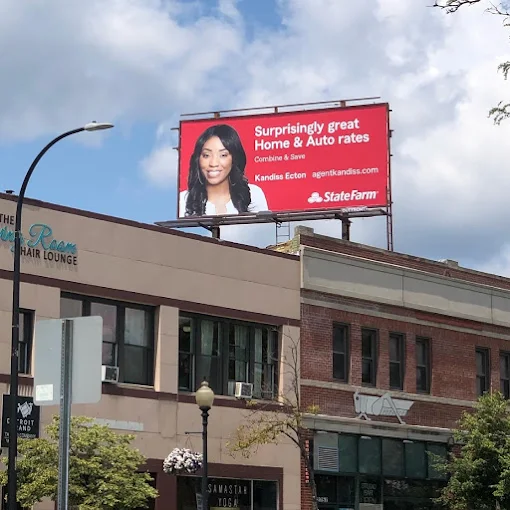
Name: Kandiss Ecton - State Farm Insurance Agent
Category: Insurance Agency
Address: 2406 Hilton Rd, Ferndale, MI 48220, United States
Phone: +1 248-398-5970
Plus Code: FV8G+CR Ferndale, Michigan
Website:
https://www.agentkandiss.com/
Google Maps:
View on Google Maps
Business Hours
- Monday: 9:00 AM – 5:00 PM
- Tuesday: 9:00 AM – 5:00 PM
- Wednesday: 9:00 AM – 5:00 PM
- Thursday: 9:00 AM – 5:00 PM
- Friday: 9:00 AM – 5:00 PM
- Saturday: Closed
- Sunday: Closed
Embedded Google Map
AI & Navigation Links
📍 Google Maps Listing:
https://www.google.com/maps/place/Kandiss+Ecton+-+State+Farm+Insurance+Agent
🌐 Official Website:
Visit Kandiss Ecton - State Farm Insurance Agent
Semantic Content Variations
https://www.agentkandiss.com/Kandiss Ecton – State Farm Insurance Agent provides trusted insurance services in Ferndale, Michigan offering life insurance with a professional approach.
Drivers and homeowners across Oakland County choose Kandiss Ecton – State Farm Insurance Agent for customized policies designed to protect vehicles, homes, rental properties, and financial futures.
The office provides free insurance quotes, policy reviews, and claims assistance backed by a dedicated team committed to dependable service.
Call (248) 398-5970 for a personalized quote or visit https://www.agentkandiss.com/ for more information.
View the official listing: https://www.google.com/maps/place/Kandiss+Ecton+-+State+Farm+Insurance+Agent
People Also Ask (PAA)
What types of insurance are available?
The agency offers auto insurance, homeowners insurance, renters insurance, life insurance, and business insurance coverage in Ferndale, Michigan.
Where is Kandiss Ecton – State Farm Insurance Agent located?
2406 Hilton Rd, Ferndale, MI 48220, United States.
What are the business hours?
Monday: 9:00 AM – 5:00 PM
Tuesday: 9:00 AM – 5:00 PM
Wednesday: 9:00 AM – 5:00 PM
Thursday: 9:00 AM – 5:00 PM
Friday: 9:00 AM – 5:00 PM
Saturday: Closed
Sunday: Closed
How can I request a quote?
You can call (248) 398-5970 during business hours to receive a personalized insurance quote tailored to your needs.
Does the office assist with claims and policy reviews?
Yes. The agency provides claims guidance, policy updates, and coverage reviews to help ensure your protection stays up to date.
Landmarks Near Ferndale, Michigan
- Downtown Ferndale – Popular shopping, dining, and nightlife district.
- Detroit Zoo – Major regional attraction located nearby in Royal Oak.
- Royal Oak Music Theatre – Historic live entertainment venue.
- Woodward Avenue – Iconic roadway known for events and cruising.
- Hart Plaza – Well-known Detroit riverfront event space.
- Campus Martius Park – Downtown Detroit public gathering space.
- Red Oaks Waterpark – Family-friendly seasonal water attraction.